
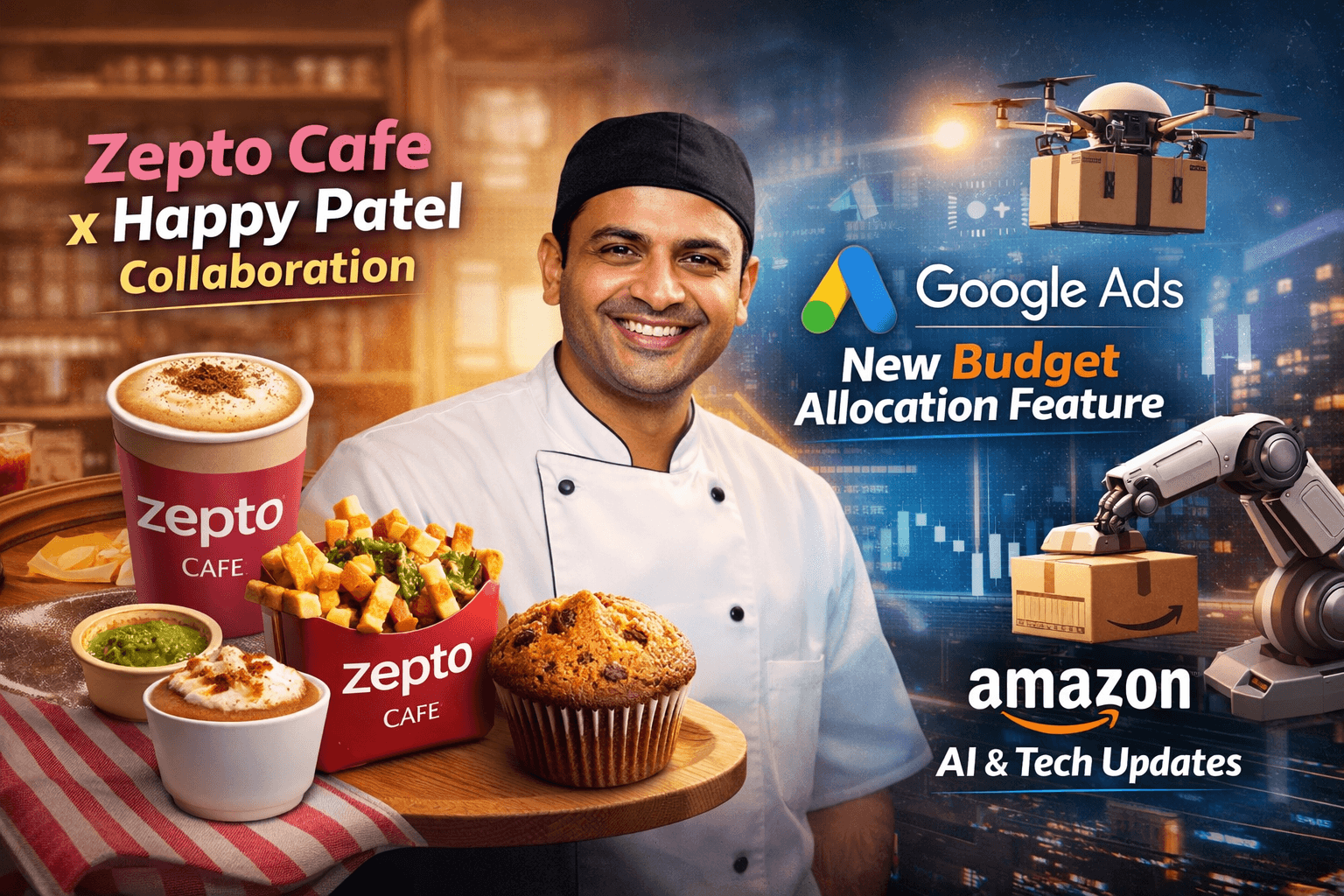
The world of business and tech is always buzzing with exciting collaborations and innovations, and this week, we’ve seen some noteworthy developments that are bound to shake up both the food industry and digital marketing landscape. From a surprising partnership between Zepto Cafe and Happy Patel to Google’s latest digital advertising update, there’s plenty to digest!
1. Zepto Cafe x Happy Patel Collaboration: A New Flavor of Success
Zepto Cafe, the rapidly growing coffee and snack chain known for its lightning-fast delivery service, has teamed up with none other than Happy Patel, the beloved celebrity chef and culinary influencer, for a unique collaboration. This partnership is set to create a buzz, combining Zepto’s reputation for convenience with Patel’s flair for creating innovative, flavorful food.
The collaboration will bring new, limited-time menu items designed by Happy Patel to Zepto Cafe’s stores nationwide. The menu will include an exciting mix of fusion snacks and beverages, blending traditional Indian flavors with Western coffeehouse favorites. Items like “Masala Chai Lattes” with a twist, “Chutney Fries,” and “Saffron Muffins” are just a few of the exciting offerings customers can expect to see.
What makes this collaboration even more interesting is Zepto’s ability to deliver these items quickly to consumers through their app, leveraging their fast-paced logistics and food delivery model. Both brands are targeting young, food-savvy millennials and Gen Z consumers who crave high-quality, exotic flavors with the added convenience of quick delivery.
The partnership comes at a time when both Zepto Cafe and Happy Patel are riding the wave of growing interest in fusion cuisine and food-tech. It will be fascinating to see how this culinary experiment plays out, especially with Happy Patel’s massive social media presence. Expect a flurry of Instagram posts and TikTok videos showcasing these innovative new dishes in the coming weeks.
2. Google’s New Campaign Budget Allocation Option: A Game Changer for Marketers
In the ever-evolving world of digital advertising, Google has introduced a new tool that promises to give marketers more flexibility and control over their campaigns. The new budget allocation feature in Google Ads allows advertisers to automatically adjust their budget distribution across multiple campaigns based on real-time performance data.
Until now, advertisers had to manually allocate budgets to each campaign and monitor them constantly to ensure their money was being spent efficiently. With Google’s new feature, however, marketers can now choose to have their budget split dynamically across campaigns, depending on which ones are performing best. This will allow for a more optimized allocation of resources, ensuring that high-performing campaigns get more funding while low-performing ones get adjusted or paused.
Here’s how it works:
Automatic Budget Reallocation: Google Ads uses machine learning to analyze performance metrics like click-through rates (CTR), conversion rates, and cost per acquisition (CPA) to redistribute the budget between campaigns dynamically.
Better ROI Management: With this automated tool, marketers can potentially increase their return on investment (ROI) by ensuring that their money is being spent where it will have the greatest impact.
Control and Flexibility: While the system will make recommendations and adjustments, marketers can still have final control over setting parameters for their budgets, ensuring that there is no loss of control over the campaigns.
This feature is expected to make a big difference for businesses of all sizes, from small startups to large enterprises. It helps to remove some of the guesswork involved in budget management and provides advertisers with more precise control over digital spend efficiency.
3. Industry Buzz: Amazon’s New AI-Powered Logistics System and Other Innovations
As the competition for e-commerce dominance intensifies, Amazon has rolled out a new AI-powered logistics system designed to optimize delivery routes and improve package tracking. This new system promises to cut down delivery times significantly and offer customers more accurate delivery windows.
The key feature of this innovation is its ability to predict delays and offer real-time updates on package locations, based on machine learning algorithms that factor in variables such as weather conditions, traffic patterns, and historical data. Amazon aims to improve customer satisfaction by delivering packages faster while providing transparency throughout the shipping process.
The AI system will also help Amazon cut down on shipping costs, enabling the company to maintain its competitive edge in the e-commerce sector. This comes alongside other innovations from Amazon, such as its drone delivery system and cashier-less stores — both of which are poised to redefine retail logistics in the years to come.
4. Meta Expands AI Tools for Ad Creators: A Boost for Marketers
In a move to further cement its position as a leading digital advertising platform, Meta (formerly Facebook) has unveiled new AI-powered tools designed to make ad creation easier and more efficient for marketers. These tools, which integrate directly with Meta’s ad platform, will help advertisers generate more personalized and dynamic ads using AI-driven insights.
The new tools include features like automated creative suggestions, where AI recommends the best images, video formats, and text based on the campaign’s target audience and goals. Additionally, Meta is introducing AI-powered copywriting tools that can generate ad copy suggestions and even suggest calls to action based on the campaign’s objectives.
These developments make it clear that AI in advertising is not just a trend but a game-changing tool for marketers looking to create more dynamic, personalized campaigns that resonate with users. With these new innovations, Meta is making it easier for advertisers to stay competitive in the crowded social media ad space, providing them with the technology needed to keep up with evolving consumer behaviors.
5. Other Noteworthy Industry Updates
TikTok Introduces “Shoppable Ads”: TikTok continues to grow its role in e-commerce by rolling out shoppable ads, allowing brands to integrate buyable products directly into their ads, creating a more seamless shopping experience for users. With TikTok’s explosive growth among younger audiences, this new feature is expected to increase brand visibility and boost sales for advertisers.
Spotify Acquires AI Music Tool “SoundBetter”: In a strategic move to expand its offerings to music creators, Spotify has acquired SoundBetter, an AI-powered music creation and collaboration platform. This acquisition is part of Spotify’s ongoing effort to build a more robust creator ecosystem and provide tools for musicians to enhance their music production capabilities.
Conclusion: Exciting Times Ahead for Food, Tech, and Advertising
This week’s developments highlight some of the most exciting innovations in business and technology. Whether it’s Zepto Cafe and Happy Patel redefining the food delivery experience or Google Ads giving marketers new ways to allocate budgets, we’re seeing cross-industry collaborations that promise to change the way we consume, create, and advertise.
As these trends continue to evolve, businesses and marketers will need to stay on top of the latest tools and innovations to maintain their competitive edge. The future of food, tech, and digital advertising looks brighter than ever, and these moves signal that innovation and collaboration are the keys to success in the years to come.