Melba Magazine
  • Home
  • News
  • Business
  • Technology
  • Fashion
  • Travel
  • Contact Us
Melba Magazine
  • Home
  • News
  • Business
  • Technology
  • Fashion
  • Travel
  • Contact Us
Tuesday, July 28, 2026
Melba Magazine
Melba Magazine
  • Business
  • News
  • Fashion
  • Travel
  • Technology
@2026 โ€“ All Right Reserved. Designed and Developed by melbamagazine
Home ยป Fashion
Category:

Fashion

Accidental Invention of Blue Jeans That Dressed the Entire World
Fashion

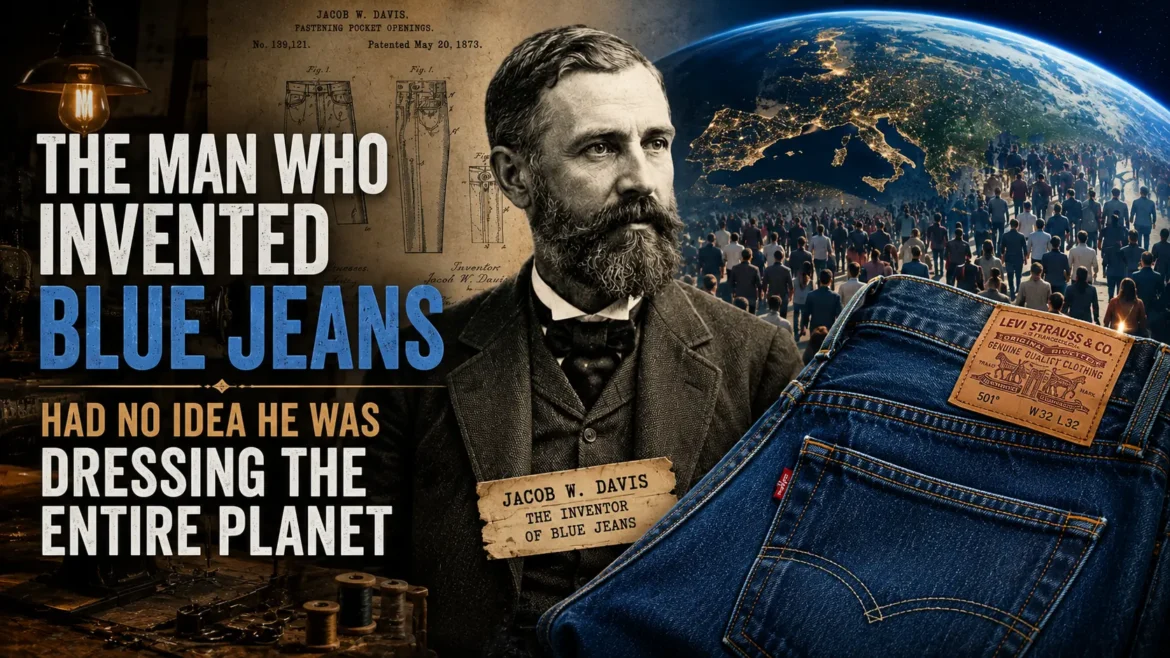
The Man Who Invented Blue Jeans Had No Idea He Was Dressing the Entire Planet

by Zonabia June 25, 2026
written by Zonabia

There is a good chance you are wearing them right now. Or you wore them yesterday. Or they are folded somewhere in a drawer within arm’s reach. Blue jeans are so ordinary, so permanently woven into daily life across every continent, that it is almost impossible to imagine a world without them.

But someone invented them. And the story of how it happened is nothing like you would expect.

It did not start on a fashion runway. It did not start with a visionary designer sketching a revolution. It started with a woman in Nevada who needed cheap, sturdy pants for her overweight husband. And a tailor who could not afford to file a patent on his own.

A Tailor From Riga Nobody Remembers

Jacob Davis was born in 1831 in Riga, Latvia, then part of the Russian Empire. He emigrated to the United States at 23, changed his name from Jacob Youphes, and spent years drifting between cities and odd jobs, New York, Maine, San Francisco, Canada, before eventually landing in Reno, Nevada, where he opened a small tailor shop making tents and wagon covers.

He was not famous. He was not wealthy. He was a working man making things for other working men in a dusty frontier town.

In 1871, a woman walked into his shop with a simple request. Her husband was a large man. His pants kept falling apart at the seams and the pockets. She needed something that would actually hold together. Davis thought about it and had an idea. He had copper rivets in his shop, the kind used to fasten horse blankets. What if he placed them at the points of strain, the pocket corners, the base of the fly, the spots where pants always tore? He tried it. The pants held.

Word spread. Working men across Reno wanted the same thing. Davis was selling 200 pairs within 18 months. He knew he had something real. He also knew that without a patent, anyone could copy him, and he was too broke to file the paperwork himself.

So he wrote a letter to his fabric supplier in San Francisco.

The Letter That Changed Fashion Forever

Levi Strauss was not a designer either. He was a Bavarian-born dry goods merchant who had come to San Francisco in 1853 at 24 years old to open a wholesale business. He sold fabric, clothing, and supplies to the small shops opening across California to serve the Gold Rush settlers. By the time Davis’s letter arrived, Strauss was a respected businessman and local philanthropist. He was also a sharp commercial mind.

Davis’s letter explained the riveted pants, described their popularity, and proposed a deal: Strauss would fund the patent application, and they would hold it together. Strauss read it and immediately said yes.

On May 20, 1873, the United States Patent Office granted Patent No. 139,121 for an “Improvement in Fastening Pocket-Openings” to Jacob W. Davis and Levi Strauss and Company. The blue jean was born.

They called them “waist overalls.” The word jeans would not come until much later. They made the first pairs from denim, a tough cotton fabric whose name comes from “serge de Nimes,” after the French city where a similar fabric had been woven for centuries. The indigo dye gave them their colour. The rivets gave them their strength. And the miners, ranchers, railroad workers, and farmers who bought them gave them their meaning.

Davis moved to San Francisco to run Strauss’s factory. He spent the rest of his life there, supervising up to 450 workers, overseeing production of the pants he invented. He died in 1908, relatively obscure, while the name above the door became one of the most recognised on earth.

The Pants That Were Too Tough to Stay Working Class

For the first several decades of their existence, blue jeans were purely functional. They were work clothes. They had no cultural weight, no fashion identity, no meaning beyond durability. Cowboys wore them because they lasted. Miners wore them because they held up to rock and dirt. Farmers wore them because nothing else survived the same abuse.

Then something unexpected happened. In the 1930s, wealthy East Coast tourists started visiting dude ranches out West, and they came home wearing jeans. A 1935 Vogue article advised readers on the proper outfit for a ranch holiday. Vogue. Advising readers to wear work pants. For the first time, denim crossed a line from labour to leisure, from necessity to choice.

World War Two pushed it further. Women entered factories and wore jeans to work. American GIs wore them off duty and carried the look overseas, where European youth saw them as symbols of the freedom and ease of American life. By the time the war ended, jeans were no longer purely a garment of the working class. They were becoming something else entirely.

The Moment Two Actors Made Jeans the Uniform of a Generation

If denim had a cultural detonation point, it was 1953 and 1955, in two darkened cinemas, on two silver screens.

Marlon Brando in The Wild One. James Dean in Rebel Without a Cause.

Brando played a motorcycle gang leader in worn jeans and a leather jacket, sullen and dangerous and entirely magnetic. Dean played a troubled teenager in blue jeans, white t-shirt, and a red jacket, searching for identity in a world that did not make sense. Both characters were exactly what the post-war generation was feeling but had no language for yet. And both of them were wearing jeans.

Schools banned them. Theatres refused entry to anyone wearing denim. Parents hated them. And so, with the perfect logic of teenage psychology, every young person in America wanted a pair.

The ban was the best advertising jeans ever received.

What the film industry did not understand is that you cannot make something uncool by telling teenagers they cannot have it. You simply confirm that it is exactly what they need. By the time the 1960s arrived, jeans had become the uniform of every counter-cultural movement worth joining. Civil rights marchers wore them to show solidarity with the working class. Anti-war protesters wore them on campuses. Woodstock was a sea of denim under an open sky. What started as pants for a Nevada miner had become the clothing of anyone who wanted to signal that they were not playing by the old rules.

How a Work Garment Ended Up on Every Runway in Paris

By the 1970s, jeans were so deeply embedded in everyday life that fashion designers faced a choice: ignore them or absorb them. They absorbed them.

Calvin Klein put his name on the back pocket and sold the idea that what you wore underneath mattered. Gloria Vanderbilt, Jordache, Sergio Valente, suddenly denim was not just functional, it was aspirational. Designer jeans became a status symbol, the same garment that had been banned from schools twenty years earlier was now being advertised in full-page magazine spreads with glamorous models and provocative taglines.

Stone washing arrived and changed everything again. Manufacturers discovered they could make new jeans look old, worn, lived-in, authentic, by tumbling them with stones. They were manufacturing the appearance of experience. Selling nostalgia for a life the buyer had never lived. And people could not get enough of it.

Then came the 1980s and hip-hop, and jeans absorbed another identity entirely. Run-DMC wore them. The Beastie Boys wore them. Denim bent to every subculture that picked it up and came out looking like it had always belonged there.

The Most Democratic Garment Ever Made

Today blue jeans are a $86 billion global industry. They are worn by presidents and protesters, teenagers and grandparents, fashion editors and construction workers. They have been on the moon. They have walked every red carpet. They have been torn, patched, embroidered, bleached, painted, and deconstructed by designers who charge thousands of dollars for the privilege of owning a pair that looks deliberately destroyed.

None of that was in Jacob Davis’s tailor shop in Reno in 1871. He was just trying to stop a working man’s pockets from tearing. He could not afford the patent filing fee on his own. He needed help from his fabric supplier and got lucky that the supplier happened to be a sharp businessman who saw the potential.

Two immigrants, one from Latvia and one from Bavaria, created the most universally worn garment in human history without any idea that is what they were doing. They wanted to sell tough pants to people who needed them. They got a little more than that.

The orange stitching on the back pockets that Davis added in 1873 to distinguish Levi’s jeans from competitors is still there today. Unchanged. On a garment that has outlasted every fashion trend, every cultural shift, every attempt to declare it over, for more than 150 years.

That is not clothing. That is something closer to a miracle.

Frequently Asked Questions

Q1. Who actually invented blue jeans?
Blue jeans were invented by Jacob Davis, a tailor from Riga, Latvia, working in Reno, Nevada. He came up with the idea of placing copper rivets at the stress points of work pants in 1871. Because he could not afford the patent filing fee alone, he partnered with his fabric supplier Levi Strauss, and the two men were granted Patent No. 139,121 on May 20, 1873.

Q2. Why are they called blue jeans and not something else?
The name has two origins. The word denim comes from “serge de Nimes,” a fabric made in the French city of Nimes. The word jean comes from Genoa, Italy, where sailors wore a similar sturdy cotton fabric. Over time the two words merged into everyday language, and by 1960 the term blue jeans had fully replaced the original name Levi Strauss used, which was “waist overalls.”

Q3. Why did schools and theatres ban blue jeans in the 1950s?
After Marlon Brando wore them in The Wild One in 1953 and James Dean in Rebel Without a Cause in 1955, blue jeans became strongly associated with youth rebellion and juvenile delinquency. Schools and theatres banned them specifically because of that association. The ban backfired completely and made jeans more desirable to teenagers than any advertising campaign could have.

Q4. When did blue jeans go from workwear to fashion?
The shift happened in stages. In the 1930s wealthy tourists started wearing jeans on dude ranch holidays and Vogue covered them as leisurewear. The 1950s Hollywood moment gave them cultural weight. By the 1970s designer labels like Calvin Klein had put their names on the back pocket and turned denim into a status symbol. Stone washing in the 1980s made new jeans look worn and authentic, and the transformation from workwear to high fashion was complete.

Q5. How big is the blue jeans industry today?
Blue jeans are today an $86 billion global industry. They are worn across every culture, every income level, and every generation on earth. From fast fashion retailers selling pairs for under $20 to luxury designers charging thousands for a single pair, denim has become the most commercially versatile garment ever created, all traced back to a tailor who could not afford a $68 patent filing fee in 1871.
June 25, 2026 0 comments
0 FacebookTwitterPinterestEmail
Latest Fashion Trends for Teens in 2026
Fashion

Style on Their Own Terms: The Latest Fashion Trends for Teens in 2026

by Zonabia June 8, 2026
written by Zonabia

Style on Their Own Terms: The Latest Fashion Trends for Teens in 2026

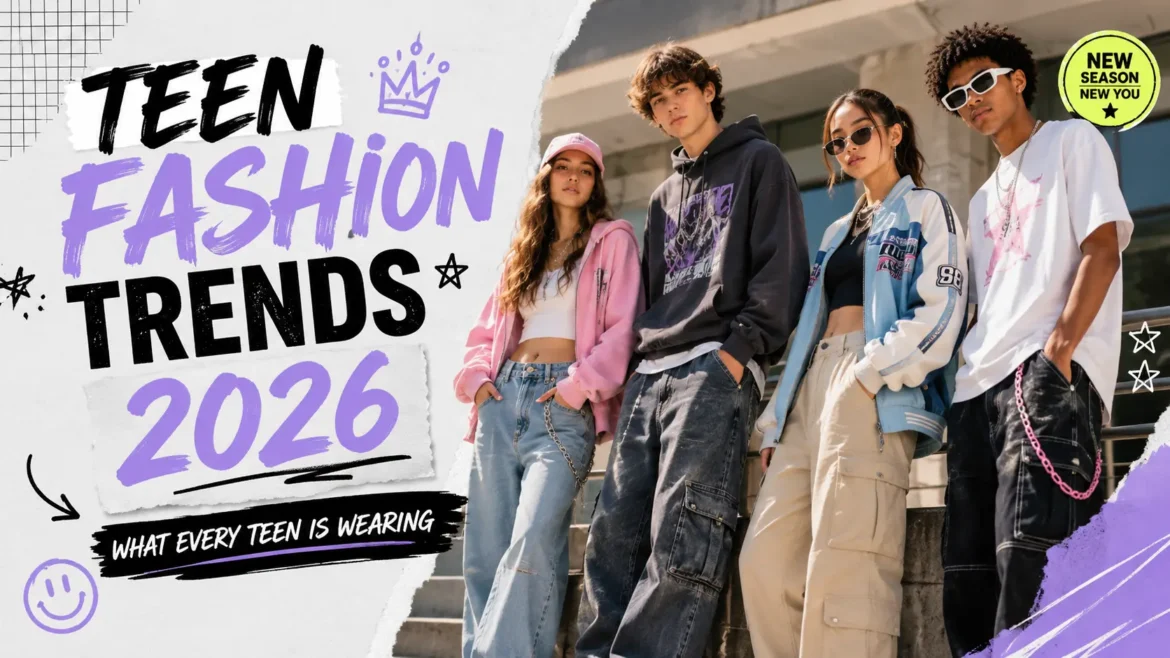
Gen Alpha has officially stepped into its own fashion lane and it is refusing to look back. In 2026, teen style is not about following a single trend. It is about fluency across multiple aesthetics, worn with confidence and intention.

Walk the corridors of any school, scroll through TikTok for five minutes, or simply observe who is turning heads on the street, and the message from today’s teenagers is clear: fashion is no longer a uniform. It is a language. And Gen Alpha speaks it with remarkable fluency.

In 2026, latest fashion trends for teens is defined not by one dominant look but by a rich ecosystem of overlapping aesthetics, each carrying its own cultural weight, social signals, and visual vocabulary. From the nostalgia-soaked revival of Y2K silhouettes to the deliberate restraint of quiet luxury, the season’s youth trends are anything but accidental. They are expressive, intentional, and increasingly influenced by the digital subcultures that now shape how young people construct identity.

“In 2026, teenagers are not just buying clothes. They are buying a vibe, a value system, a way of telling the world exactly who they are.”

The Y2K Revival: Nostalgia, Reimagined

If there is one trend that continues to anchor teen wardrobes across demographics, it is the ongoing revival of Y2K aesthetics. The early 2000s references that resurged around 2020 have not merely lingered. They have evolved into a fully fledged movement, constantly being remixed with contemporary silhouettes to keep the look alive rather than costume-like.

Low-rise jeans, baby tees, butterfly clips, velour tracksuits, and chunky platform sneakers are all prominent this season. What distinguishes today’s Y2K approach is its selectivity. Teens are not recreating the era wholesale; they are sampling its most expressive moments and blending them with current cuts and fabrics. Satin cargo trousers paired with fitted tanks, Y2K-era graphic shirts layered under slip dresses, beaded jewellery styled alongside modern minimalist pieces. The mix is deliberate, not derivative.

Rhinestone detailing, once considered garish, has made a full comeback across jeans, bags, and accessories, offering a sense of playful excess that feels fresh against the backdrop of years of minimalism. Chokers are back across genders, layered with chains or worn alone for subtle impact.

Quiet Luxury and the Clean Girl Aesthetic

Running in sharp contrast to Y2K excess is the continued dominance of quiet luxury, a trend defined by its deliberate understatement. Tailored blazers, high-quality basics in neutral palettes, and minimalist separates dominate this aesthetic, particularly among teens entering internships or beginning to navigate more formal social environments.

Feeding directly into this is the Clean Girl aesthetic, which positions activewear as the default daily uniform. Brands such as Lululemon and the increasingly fashionable Alo Yoga have become cultural touchstones in this space. While Lululemon retains authority in performance leggings, Alo Yoga has surged in 2026 as the more fashion-forward status symbol for teens who treat wellness as a lifestyle identity, not merely a fitness routine.

The Clean Girl look extends beyond clothing into grooming and lifestyle curation: slicked-back hair, gold jewellery, seamless sets, and an overall presentation that signals effortless organisation. It is aspirational minimalism and it resonates powerfully with an age group navigating the pressures of visibility in both physical and digital spaces.

Coquette, Gorpcore, and the Language of Aesthetics

Among the most searched and hashtagged aesthetics of the year are Coquette and Gorpcore, two styles that sit at polar opposites of the fashion spectrum yet share the same underlying logic: clothing as identity statement.

The Coquette aesthetic reclaims hyper-femininity with deliberate intention. Bows appear on everything: hair accessories, bag hardware, shoe details. Ruffle-hem skirts with movement and volume, lace detailing, and soft pink and lilac palettes define the look. Far from passive, this style functions as an assertion: femininity chosen consciously is a form of power.

Gorpcore, previously associated with outdoor enthusiasts, has by 2026 completed its transition into mainstream youth fashion. This season’s iteration, sometimes called Wilderkind, leans into forest-inspired palettes of khaki, sage, tan, and fox-orange. Technical vests, cargo-detailed trousers, and desert boots are styled not for treks but for school corridors and weekend outings. The appeal lies in versatility: these are clothes that travel seamlessly from one context to the next.

“The trend cycle has fractured. There is no longer one look for teenagers. There are dozens of fluent visual languages, spoken simultaneously and often by the same person.”

Denim: The Shape-Shifting Staple

Denim in 2026 is anything but static. The season accommodates an unusually wide range of silhouettes simultaneously: wide-leg and baggy cuts, bootcut flares, high-rise styles, and the resurgent low-rise, all worn with equal confidence. Gray jeans have emerged as a significant update on the classic blue, offering versatility without sacrificing the denim sensibility. Embellished jeans with rhinestones, raw-hem detailing, and brut or untreated finishes add texture and personality to what might otherwise be a neutral base piece.

Brut denim, characterised by its unwashed and untreated appearance, has gained particular visibility in streetwear circles. Worn as matching jacket-and-jeans sets or styled with graphic tees, it projects a raw, authentic attitude that resonates with teens who are increasingly sceptical of polished, over-produced aesthetics.

The Role of Social Media and Subculture

No analysis of latest fashion trends for teens in 2026 is complete without acknowledging the role of digital platforms in accelerating, fragmenting, and sustaining the trend cycle. TikTok and Instagram remain the primary engines of aesthetic dissemination, but the dynamics have shifted. Rather than a single dominant look spreading virally, the algorithm now sustains dozens of micro-communities simultaneously, each with its own visual grammar, reference points, and shopping preferences.

Micro-trends, defined as styles that peak and fade within four to eight weeks, now exist alongside more durable aesthetic movements. Teens navigate both fluently, experimenting with viral moments at low financial risk while investing more deliberately in the aesthetics that genuinely reflect their identity.

Sustainability, too, is reshaping how this generation shops. Thrifting has become a badge of creative credibility. The thrill of the find now carries more cultural currency than the ease of a brand-new purchase. Vintage pieces are styled into contemporary fits, and the ability to curate a wardrobe from disparate sources is increasingly celebrated as a skill.

Conclusion

What latest fashion trends for teens in 2026 ultimately communicates is a generation that has moved decisively past the era of monolithic style. There is no single look for teenagers today. There are dozens of fluent visual languages, spoken simultaneously, and often by the same person across different contexts and moods. Style is not a trend to be followed but a medium to be mastered.

For anyone looking to understand what young people value in 2026, the wardrobe is a reliable place to start. It tells a story of confidence, creativity, cultural literacy, and above all, the desire to be seen on one’s own terms.

June 8, 2026 0 comments
0 FacebookTwitterPinterestEmail
sustainable clothing manufacturers
Fashion

The Ethical Sourcing Guide: How to Find Sustainable Clothing Manufacturers and Avoid Greenwashing

by Danny Williams June 4, 2026
written by Danny Williams

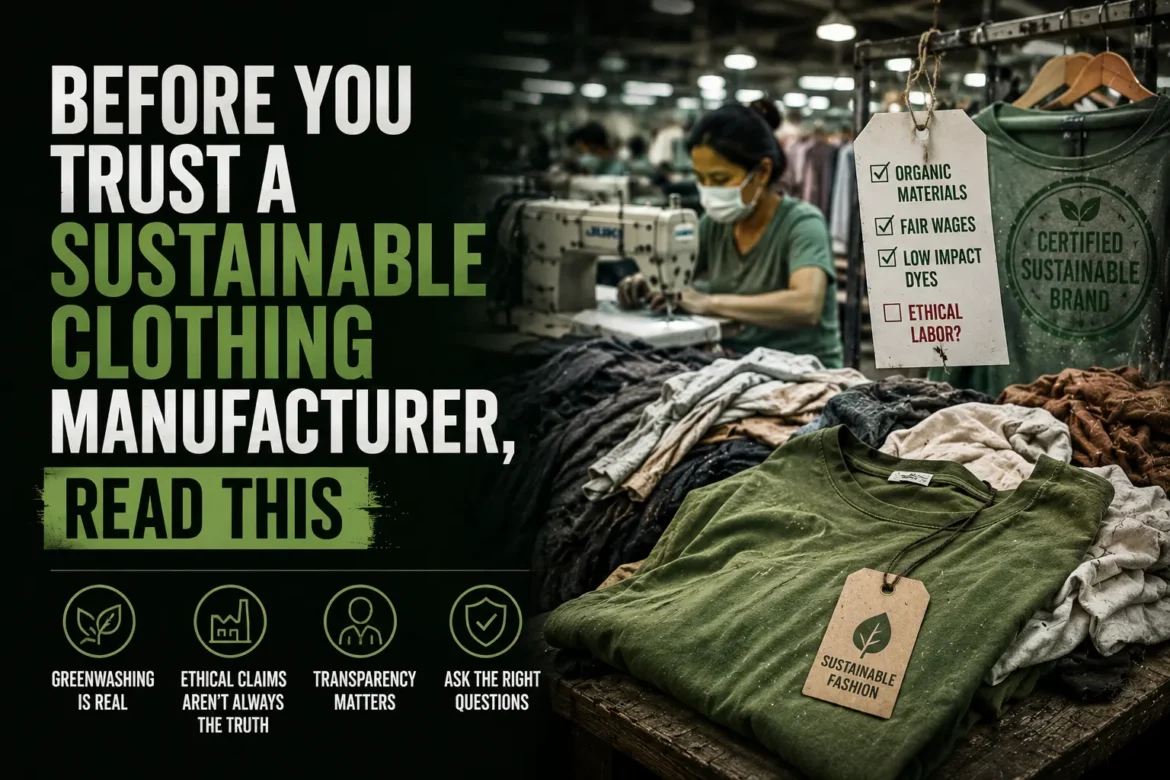
Starting or growing an eco-friendly textile business sounds simple until you reach the hardest question of all: who actually makes your clothes, and can you trust their green claims? The fashion supply chain is crowded with factories that promise sustainability and deliver buzzwords. Getting this wrong does not just dent your margins, it can sink your brand’s credibility overnight.

This ethical sourcing guide breaks down how to evaluate sustainable clothing manufacturers, how to read the two certifications that matter most, and how to spot greenwashing before it becomes your problem.

Why Ethical Sourcing Matters for Your Eco-Friendly Textile Business

The stakes here are high. Fashion is responsible for an estimated 10% of global carbon emissions, along with significant water use, chemical pollution, and waste. Consumers and regulators are paying closer attention than ever, and the penalty for a hollow sustainability claim is steep.

For a brand, your factory is your footprint. You can design the most thoughtful collection in the world, but if it is cut and sewn in a facility with unsafe conditions, unfair wages, or untreated chemical runoff, your “sustainable” label is fiction. Choosing the right partners is not a marketing afterthought. It is the foundation of the entire business.

How to Evaluate Sustainable Clothing Manufacturers

Vetting a factory takes more than a glance at its website. Use this as a working checklist when you assess any potential partner.

Start with proof, not promises. Ask every prospective manufacturer for its certifications by name and number, then verify them directly with the certifying body rather than trusting a logo on a PDF. Request recent third-party audit reports covering both environmental practices and labor conditions.

Investigate labor before you fall in love with the price. A low quote often hides someone else paying the real cost. Ask whether workers earn a living wage rather than just the local minimum, since in many countries those are very different numbers. Ask about working hours, safety, freedom to unionize, and whether the factory is visited regularly, either by your team or a trusted independent auditor.

Trace the chain, not just the final stitch. A responsible manufacturer can tell you where its fabric, dyes, and trims come from. If a supplier cannot explain its own supply chain, that is a signal it either does not know or does not want you to.

Check the environmental basics. Look for wastewater treatment at any wet-processing or dyeing facility, responsible chemical management, and credible handling of waste. Vague reassurance is not the same as a documented system.

Understanding Textile Certifications: GOTS vs OEKO-TEX

Two certifications dominate the conversation, and they are not interchangeable. The simplest way to remember the difference: OEKO-TEX asks whether a textile is safe to wear, while GOTS asks whether it was made responsibly from start to finish.

What Gots Certification Actually Covers

The Global Organic Textile Standard, established in 2006, is widely regarded as the leading standard for organic textiles. Its defining feature is scope. GOTS covers the entire supply chain, from the harvesting of organic raw fibers through manufacturing, chemical inputs, packaging, labeling, and distribution.

Crucially for an ethical brand, GOTS includes social criteria, not just environmental ones. Certified facilities must meet International Labour Organization standards, which cover fair wages, safe working conditions, and a prohibition on child labor. It also requires environmental controls such as wastewater treatment at wet-processing sites and bans on toxic inputs like certain heavy metals and formaldehyde. To carry the label, a product must contain at least 70% certified organic fibers for a “made with organic” claim, and 95% or more for a full “organic” claim. Audits are carried out by independent, accredited third parties.

What OEKO-TEX STANDARD 100 Actually Covers

STANDARD 100 by OEKO-TEX is a globally recognized testing and certification system focused on one thing: chemical safety of the finished product. To earn it, a textile must be tested and proven free from a long list of more than a hundred substances known to be harmful to human health.

Its strengths and limits both come from that focus. OEKO-TEX tests every component, including threads, buttons, zippers, and prints, and it applies to any fiber type, whether organic cotton, conventional cotton, or synthetics like polyester and nylon. What it does not do is certify how or where the product was made, or address labor practices and organic sourcing. It tells you the product is safe, not that it was made responsibly.

GOTS vs OEKO-TEX: Which Does Your Business Need?

The honest answer for most serious sustainable brands is both. They cover different gaps. GOTS verifies organic integrity and ethical production across the supply chain, while OEKO-TEX confirms the final product is free from harmful substances regardless of fiber type. Many manufacturers hold both, and dual certification is one of the strongest credibility signals you can look for. If you work with synthetics or non-organic blends, GOTS will not apply to those materials, which makes OEKO-TEX especially important.

How to Spot Greenwashing: Red Flags Every Buyer Should Know

Greenwashing is when a company uses misleading language to appear more sustainable than it is. The problem is widespread. One study by the Changing Markets Foundation found that the majority of green claims made by fast fashion brands did not hold up, with the false rate reaching as high as 96% in some cases. Here are the warning signs to watch for, whether you are vetting a manufacturer or auditing your own marketing.

Empty vocabulary. Words like “conscious,” “eco,” “responsible,” “earth friendly,” and even “sustainable” have no legal definition on their own. If a claim is not backed by a named certification or a measurable figure, treat it as marketing, not fact.

The green halo. A common trick is showcasing one “hero” product, fabric, or factory while the rest of the business runs on the same unsustainable model. A single recycled-polyester line does not make a high-volume operation ethical.

Numbers without context. Claims like “30% more sustainable” or “reducing emissions” are meaningless without a baseline, a deadline, and third-party verification. Curated statistics with no challenges mentioned usually signal a carefully edited slice of the truth.

No transparency page. A credible operation has a clearly marked section explaining how it defines sustainability, how it audits its supply chain, and how workers are paid and protected. A single vague paragraph buried on the site is a red flag.

Future promises, no plan. Bold pledges set far in the future, with no concrete steps or interim milestones, are easy to make and easy to abandon. Ask what is happening this year, not just by 2030.

Questions to Ask a Factory Before You Sign

Bring these directly to any prospective partner. The quality and specificity of the answers will tell you almost everything.

Which certifications do you hold, and can I verify them with the issuing body? Can I see your most recent environmental and social audit reports? Do workers earn a living wage, and what are your standard working hours? How do you treat and dispose of wastewater and chemicals? Can you trace your fabric and trims back to their source? Can I visit the facility, or arrange an independent inspection?

A genuine sustainable clothing manufacturer will welcome these questions. Evasiveness, generic replies, or pressure to skip the due diligence are themselves the answer.

Building a Credible, Eco-Friendly Textile Business

Sourcing ethically is not a one-time box to tick. It is an ongoing relationship built on verification, documentation, and honesty. Lead with specifics rather than slogans, hold your suppliers to the same standard you advertise to customers, and be transparent about where you are still improving. In a market crowded with greenwashing, that kind of substance is not just the right thing to do. It is your strongest competitive advantage.

Frequently Asked Questions

Q1. What is the difference between GOTS and OEKO-TEX?
GOTS certifies that a textile was made responsibly across the whole supply chain, including organic fiber sourcing and fair labor. OEKO-TEX STANDARD 100 tests the finished product for harmful chemicals and applies to any fiber type. GOTS is about how it was made; OEKO-TEX is about whether it is safe to wear.

Q2. Do sustainable clothing manufacturers need both certifications?
Not strictly, but holding both is a strong credibility signal. GOTS covers organic and ethical production, while OEKO-TEX confirms chemical safety, including for synthetic materials that GOTS does not cover.

Q3. How can I tell if a clothing factory is greenwashing?
Look for vague, undefined terms, claims without certifications or measurable data, a single “green” product used to imply the whole business is sustainable, and a lack of any clear supply chain transparency or audit information.

Q4. What does a living wage mean in ethical sourcing?
A living wage is enough to cover a worker’s basic needs, which is often higher than the legal minimum wage. Paying minimum wage alone does not guarantee ethical labor conditions.

Q5. How do I start an eco-friendly textile business the right way?
Begin with verified suppliers, request certifications and audit reports, trace your materials, and be transparent with customers about your sourcing and your areas for improvement, rather than relying on green buzzwords.

June 4, 2026 0 comments
0 FacebookTwitterPinterestEmail
Stephen Curry Leaves Under Armour for china
Fashion

Steph Curry Closes the Door on Under Armour and Bets Big on China

by Danny Williams June 2, 2026
written by Danny Williams

The sneaker world just got its biggest shock in years. Stephen Curry, the greatest shooter the NBA has ever seen, has officially turned the page on Under Armour and tied his future to a Chinese giant. After more than half a year as a sneaker free agent, the Golden State Warriors star has signed a landmark 10-year deal with Li-Ning, and he is not calling it just another contract. He is calling it the partnership of a lifetime.

For a player whose name has been stitched into Under Armour’s identity for over a decade, the move lands like a thunderclap, and it reshapes the global battle for basketball’s biggest brands.

What Is Stephen Curry’s New Li-Ning Deal?

Stephen Curry announced the agreement on Monday in a personal letter and video posted to social media. Industry sources put the length at 10 years, making it one of the most significant endorsement moves in basketball since his split from Under Armour.

This is far more than a shoe contract. The deal carries Curry’s entire Curry Brand venture over to Li-Ning and expands it worldwide. It covers basketball products, athleisure and lifestyle wear, and a full golf line. It also gives Curry the power to sign both male and female athletes under his own brand. On top of that, Li-Ning plans to open Curry Brand stores in both the United States and China, a sign of just how global the ambition runs.

Curry framed the partnership as a turning point, saying the future of Curry Brand now sits with Li-Ning and that the company can deliver the innovation and design he wants his name to stand for.

Why Did Stephen Curry Leave Under Armour?

The split itself happened back in November, ending a partnership that stretched roughly 12 years. Curry famously chose Under Armour over Nike in 2013, a decision that stunned the industry at the time and helped transform Under Armour into a serious player in basketball.

Together they launched Curry Brand in 2020, and Curry eventually rose to become its president. When the two sides parted, the brand was separated from the company, leaving Curry free to take it wherever he wanted. He spent the months that followed as the most wanted free agent in sneakers, testing products and weighing pitches from American and foreign brands alike.

One detail tipped the scales toward Li-Ning. Curry was impressed by the comfort of shoes worn by two of the company’s existing signature athletes: his Warriors teammate Jimmy Butler and NBA legend Dwyane Wade.

What the Split Cost Under Armour

For Under Armour, losing Curry is a heavy blow at a difficult moment. The company has been wrestling with falling sales, including a double-digit revenue drop in its key North America market.

The breakup also came with a real financial sting. Reports indicate the exit was folded into a restructuring charge approaching 100 million dollars, and Curry’s personal equity stake in the company, valued at 75 million dollars when granted in 2023, had lost roughly half its worth. Walking away from the brand that built his signature line was not a small decision, which makes his leap to Li-Ning all the more striking.

Who Is Li-Ning, and Why China?

Li-Ning is not a newcomer. The company was founded in 1990 by Li Ning, a celebrated Chinese gymnast who became a national hero after winning a haul of medals at the 1984 Los Angeles Olympics.

Over the years the brand has courted NBA talent, with athletes like Dwyane Wade, Jimmy Butler, Fred VanVleet, and CJ McCollum among those linked to it. For Curry, China represents enormous untapped potential. The country is one of basketball’s largest and most passionate markets, and pairing his global fame with a homegrown Chinese powerhouse gives Curry Brand a launchpad it never had before.

What the Deal Means for Curry Brand

The long-term vision is what makes this deal so bold. Curry has spoken about building Curry Brand into a global force, and analysts have been quick to draw comparisons to the most successful athlete brand of all time. One NBA insider suggested that Curry Brand has, in effect, just gained the global platform that Jordan Brand has enjoyed for decades.

Curry, who is also the founder and CEO of his Thirty Ink business empire, clearly sees himself as more than an endorser. With the freedom to sign his own athletes and expand across basketball, golf, and lifestyle categories, he is positioning Curry Brand as a lasting business rather than a product line tied to his playing days.

How the NBA World Reacted

The reaction was immediate and loud. Across social media, players, analysts, and fans expressed astonishment at both the scale of the move and the money likely involved, with several speculating that the package was massive and possibly included equity in the company.

Whatever the final numbers, the message is clear. At 38, with four championships and two MVPs already secured, Stephen Curry is no longer just chasing rings. He is building a legacy that he intends to outlast his time on the court, and he is doing it on a global stage.

June 2, 2026 0 comments
0 FacebookTwitterPinterestEmail

Recent Posts

  • The Government Just Started a Race Against Hackers Who Don’t Exist Yet
  • Your Right to Fix Your Own Stuff Just Got a Lot More Real
  • Scientists Just Crossed the Quantum Line Everyone Said Was Years Away
  • AI Just Became the #1 Reason Companies Say They’re Cutting Jobs
  • The Site of America’s Worst Nuclear Disaster Is Reopening. Blame AI.

Recent Posts

  • The Government Just Started a Race Against Hackers Who Don’t Exist Yet

    July 18, 2026
  • Your Right to Fix Your Own Stuff Just Got a Lot More Real

    July 18, 2026
  • Scientists Just Crossed the Quantum Line Everyone Said Was Years Away

    July 18, 2026
  • AI Just Became the #1 Reason Companies Say They’re Cutting Jobs

    July 18, 2026
  • The Site of America’s Worst Nuclear Disaster Is Reopening. Blame AI.

    July 18, 2026
  • Your Kid’s Voice Isn’t Safe Anymore. Here’s Proof.

    July 18, 2026

Social Feed

Social Feed

Melba Magazine tells the world’s stories with clarity, depth, and a point of view – across business, technology, travel, fashion, and culture.

Explore Content

> News

> Business

> Technology

> Fashion

> Travel

About & Contact

> About Us

> Contact Us

> Privacy Policy

> Guidelines

> Prohibited Content Policy

Must read

The Government Just Started a Race Against Hackers Who Don’t Exist Yet
Your Right to Fix Your Own Stuff Just Got a Lot More Real
Scientists Just Crossed the Quantum Line Everyone Said Was Years Away

@2026 – All Right Reserved. Designed and Developed by melbamagazine

Melba Magazine
  • Home