
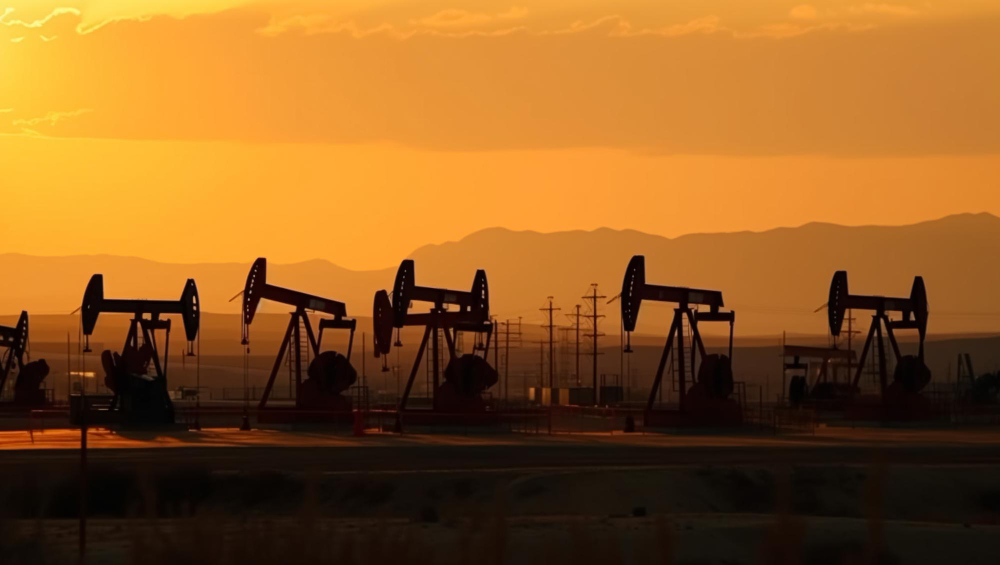
Crude oil prices have surged past the $100-per-barrel mark for the first time in years, sending shockwaves through global financial markets and triggering widespread anxiety in India – the world’s third-largest oil consumer. With Brent Crude trading around $102.50 per barrel and WTI at approximately $101.20 per barrel, the spike marks a near 8% jump in just a week. The trigger: an escalating military conflict involving the United States, Israel, and Iran – and a perfect geopolitical storm that India finds itself squarely in the middle of.
Crude Oil Price Today: Brent and WTI Cross the $100 Mark
Brent Crude futures are hovering around $102.50 per barrel, while WTI stands at $101.20 – both well above the $70–$72 range seen just two weeks earlier in February. This dramatic reversal came after escalating military strikes on Iranian targets, which reignited global fears about supply disruptions in the Middle East. The Strait of Hormuz – a narrow waterway through which approximately half of India’s crude oil transits – is now under direct threat. Energy analysts warn that if the conflict prolongs, current price levels could be just the beginning. Options markets are already pricing in a scenario where Brent touches $120 per barrel by Q2 2026.
India Crude Oil Import Dependency: Why Every Dollar Matters
India imports nearly 88% of its crude oil requirement, making it acutely sensitive to global price movements. The country’s total crude imports hit a record 5.3 million barrels per day (mbd) in February 2026. According to Rystad Energy, even a few dollars’ increase in crude oil prices can “materially affect the country’s energy economics.” In real terms, every $1 rise in crude oil raises India’s annual import bill by approximately $2 billion. With prices surging over $30 per barrel since mid-February, the financial implications are staggering. The rupee has already weakened to an all-time low of 92.5 against the US dollar, further amplifying the import burden. Indian government bond yields have also risen to a three-week high of 6.71%, reflecting market nervousness about inflation and a widening Current Account Deficit.
Russia Oil Imports India: A Geopolitical Tightrope
One of the most complex dimensions of India’s crude oil situation is its evolving relationship with Russian oil. After Russia’s invasion of Ukraine in 2022, India dramatically scaled up purchases of discounted Russian Urals crude – from below 1% of total imports to over 40% at peak. However, US pressure and a trade deal framework announced in February 2026 forced Indian refiners to cut back significantly. Russia’s share in India’s crude imports fell below 20% in January 2026 – the lowest since December 2022 – with Russian arrivals dropping to around 1 mbd, down from 1.6 mbd during 2023–2025.
The irony is sharp: India reduced Russian oil imports to appease Washington – and then found Middle Eastern supplies disrupted by the very US military action that caused the current crisis. Indian refiners are now scrambling. State-run companies like IOC, BPCL, and HPCL have activated emergency procurement, while Reliance Industries has quietly resumed Russian crude imports in February.
Petrol and Diesel Prices in India: Will There Be a Hike?
Despite the surge in global crude oil prices, petrol and diesel prices in India have remained unchanged for the past 12 months. As of March 9, 2026:
Delhi: Petrol at ₹94.77/litre | Diesel at ₹87.67/litre
Mumbai: Petrol at ₹103.54/litre | Diesel at ₹90.03/litre
Hyderabad: Petrol at ₹107.45/litre (highest among metros)
Oil Marketing Companies (OMCs) – IOC, BPCL, and HPCL – have so far absorbed global price fluctuations without passing them on to consumers. However, analysts warn this is not sustainable if crude remains above $100 for an extended period. The government, wary of inflationary pressure and its impact on the RBI’s monetary policy, is treading carefully. But if global oil prices remain elevated, a fuel price revision cannot be ruled out in the coming weeks.
Strait of Hormuz Disruption: The Supply Shock Nobody Wanted
The Strait of Hormuz is the world’s most critical oil transit chokepoint – and it is now at the heart of the current crude oil price crisis. Vessel tracking data from Nomura suggests that around half of India’s crude oil imports currently transit through this narrow passage. Kuwait has already confirmed reduced oil and refinery production following disruptions linked to the conflict. Iraq, one of India’s major suppliers, is also cutting output. Shipping insurance costs have skyrocketed, cargoes are being rerouted, and LNG shipping has slowed – all compounding the supply shock. A sustained closure of the Strait would be among the most severe energy events in modern history.
OPEC Production Hike vs Geopolitical Risk: What Happens Next?
Before the Middle East escalation, global oil markets were actually trending bearish. J.P. Morgan Global Research had forecast Brent crude averaging around $60 per barrel in 2026, underpinned by soft demand fundamentals. OPEC+ had planned a 206,000 barrels per day output increase in April, and the IEA had warned of a sizable global surplus through 2026.
All of that calculus has now changed. The geopolitical risk premium has overwhelmed fundamentals – at least for now. If diplomatic channels succeed, prices could fall back sharply. But if tensions escalate further – especially any closure of the Strait of Hormuz – oil markets could experience a supply shock not seen since the Iranian Revolution of 1979. For India, the message is clear: energy security is not just a policy priority – it is an economic survival imperative.
Must Read: Emma Watson Dating Mexican Billionaire Gonzalo Hevia Baillères