
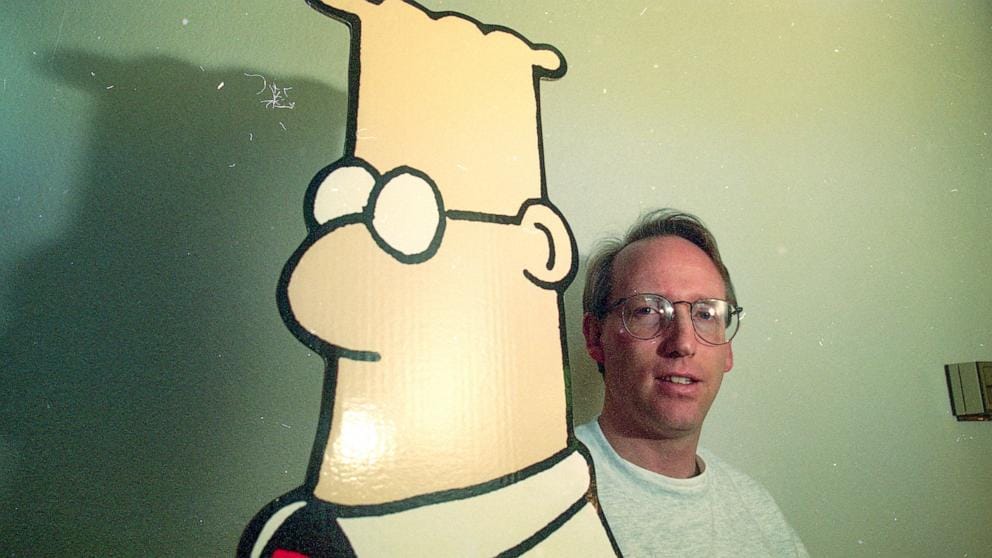
Scott Adams, the acclaimed cartoonist best known for creating the iconic comic strip “Dilbert,” has died at the age of 68 after a battle with prostate cancer, his family confirmed. The news has prompted tributes from fans worldwide, as well as public figures who recognized the profound impact his work had on how we laugh at and understand the absurdities of modern work life.
Adams’s passing marks the end of a career that spanned decades and made him a household name, not only in the world of comics but in global popular culture.
Who Was Scott Adams? A Voice for the Everyday Worker
Scott Adams was an American cartoonist, author, and commentator born in 1957. He rose to prominence by blending humor with sharp observations about office culture, corporate bureaucracy, and the everyday frustrations that millions of people face in workplaces around the world.
Before achieving fame, Adams worked in corporate environments himself, where he drew on real-life experiences to shape his creative voice. This background gave Dilbert its authenticity – the sense that the characters and situations weren’t just funny, but somehow familiar to anyone who ever sat in meetings they didn’t understand or reported to a boss who didn’t make sense.
His ability to take the commonplace challenges of office life and turn them into something both hilarious and deeply recognizable was the foundation of his success.
The Breakthrough: ‘Dilbert’ and Instant Recognition
Scott Adams catapulted into fame with his comic strip “Dilbert,” which debuted in newspapers in 1989. The strip introduced readers to:
- Dilbert, the well-meaning but exasperated engineer
- The Pointy-Haired Boss, whose clueless leadership became a universal symbol
- Wally, whose mastery of doing as little as possible became legendary
- Dogbert, whose schemes were both absurd and brilliant
What made Dilbert different from other comics of its time was its focus on the modern workplace – a setting rarely explored with such wit and insight. Instead of talking about family life or superheroes, Adams built a universe inside cubicles, coffee breaks, pointless memos, and TPS reports. It was instantly relatable and quickly became a cultural phenomenon.
Within just a few years of its launch, Dilbert was syndicated in dozens of countries and translated into multiple languages. It became the comic that office workers everywhere quoted, shared, and passed around like a secret code for surviving the daily grind.
Beyond the Comic Strip: Scott Adams’s Broader Impact
While Dilbert was the cornerstone of his career, Scott Adams’s influence stretched far beyond the Sunday funnies:
- Cultural Language and Business Parody
Terms like “Pointy-Haired Boss” entered everyday speech, used by employees to describe real-world managers who seemed out of touch. His cartoons turned workplace satire into a recognized cultural genre.
- Books and Thought Leadership
Adams authored several books about creativity, success, and the role of humor in life. Titles like The Dilbert Principle offered insights into organizational dysfunction, combining sharp humor with real social commentary.
- Digital and Online Influence
As the internet grew, Dilbert found a new home online, where strips were shared across social media, message boards, and email threads – helping Adams reach new generations of readers. His ability to evolve with changing media kept Dilbert relevant even as traditional newspaper readership declined.
- Conversations About Work, Management, and Productivity
Beyond laughs, Adams’s work sparked conversations in boardrooms, HR departments, and team meetings about the inefficiencies and absurdities his comics highlighted. CEOs, managers, and employees alike found in Dilbert a mirror reflecting familiar organizational challenges.
A Legacy That Will Endure
Scott Adams’s work did more than make us laugh – it gave millions a way to articulate the frustrations of office life with clarity and humor. For decades, Dilbert served as a reminder that work could be satirized without malice, and that humor could be a bridge between people of all professions.
His fans didn’t just read his comics; they lived them. Whether it was a ridiculous meeting, a clueless manager, or an endless round of corporate bureaucracy, Adams’s creations helped people find humor in their everyday realities.
As tributes continue to pour in – from readers to public figures – one thing is clear: Scott Adams may be gone, but his work and the laughter he inspired will stay. Dilbert will continue to be read, quoted, and shared for generations, a testament to the timeless power of satire and the universal experience of life at work.
Scott Adams’s name will be remembered, but his work – sharp, honest, and funny – will endure.