Style on Their Own Terms: The Latest Fashion Trends for Teens in 2026
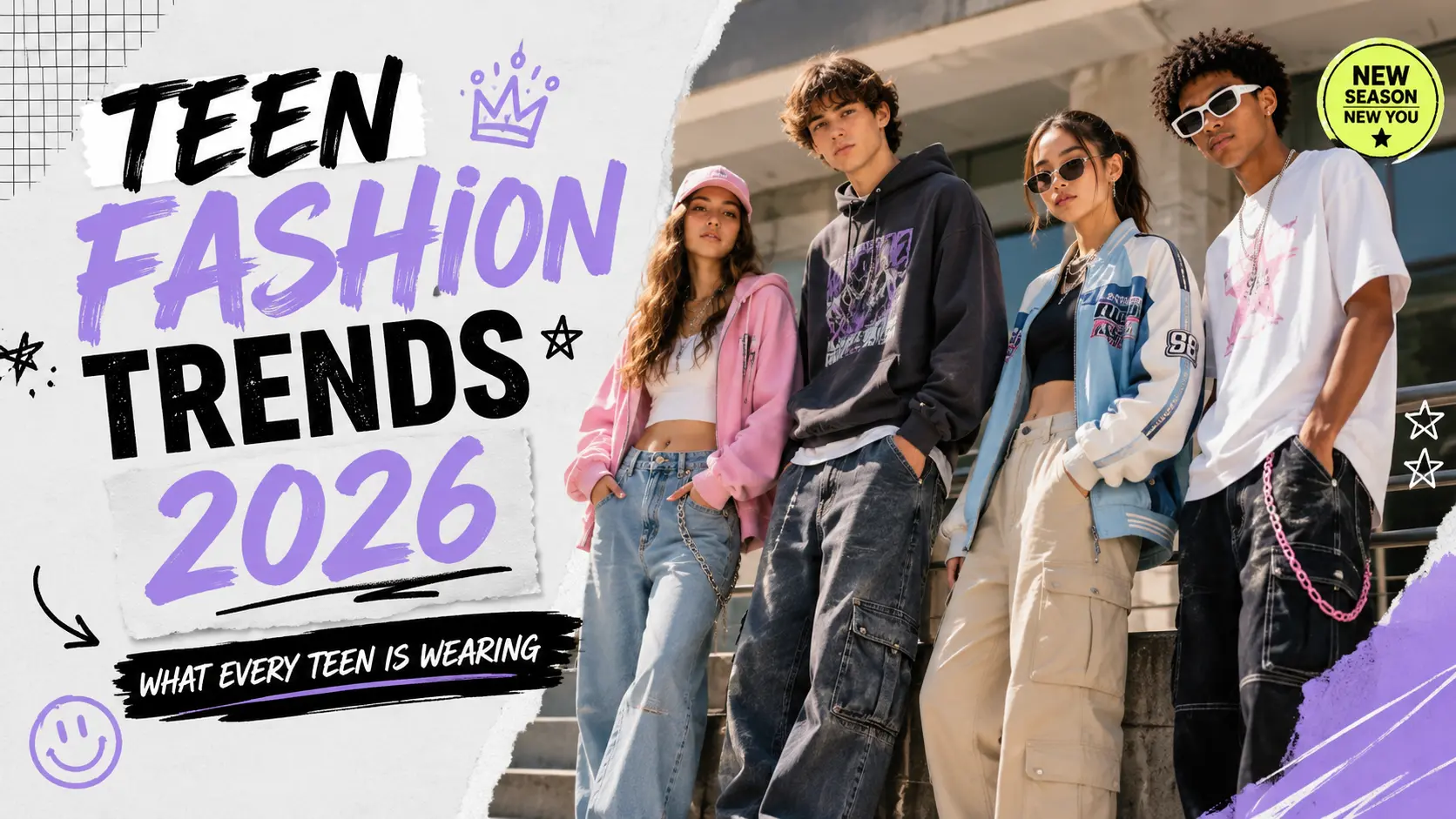
Gen Alpha has officially stepped into its own fashion lane and it is refusing to look back. In 2026, teen style is not about following a single trend. It is about fluency across multiple aesthetics, worn with confidence and intention.
Walk the corridors of any school, scroll through TikTok for five minutes, or simply observe who is turning heads on the street, and the message from today’s teenagers is clear: fashion is no longer a uniform. It is a language. And Gen Alpha speaks it with remarkable fluency.
In 2026, latest fashion trends for teens is defined not by one dominant look but by a rich ecosystem of overlapping aesthetics, each carrying its own cultural weight, social signals, and visual vocabulary. From the nostalgia-soaked revival of Y2K silhouettes to the deliberate restraint of quiet luxury, the season’s youth trends are anything but accidental. They are expressive, intentional, and increasingly influenced by the digital subcultures that now shape how young people construct identity.
“In 2026, teenagers are not just buying clothes. They are buying a vibe, a value system, a way of telling the world exactly who they are.”
The Y2K Revival: Nostalgia, Reimagined
If there is one trend that continues to anchor teen wardrobes across demographics, it is the ongoing revival of Y2K aesthetics. The early 2000s references that resurged around 2020 have not merely lingered. They have evolved into a fully fledged movement, constantly being remixed with contemporary silhouettes to keep the look alive rather than costume-like.
Low-rise jeans, baby tees, butterfly clips, velour tracksuits, and chunky platform sneakers are all prominent this season. What distinguishes today’s Y2K approach is its selectivity. Teens are not recreating the era wholesale; they are sampling its most expressive moments and blending them with current cuts and fabrics. Satin cargo trousers paired with fitted tanks, Y2K-era graphic shirts layered under slip dresses, beaded jewellery styled alongside modern minimalist pieces. The mix is deliberate, not derivative.
Rhinestone detailing, once considered garish, has made a full comeback across jeans, bags, and accessories, offering a sense of playful excess that feels fresh against the backdrop of years of minimalism. Chokers are back across genders, layered with chains or worn alone for subtle impact.
Quiet Luxury and the Clean Girl Aesthetic
Running in sharp contrast to Y2K excess is the continued dominance of quiet luxury, a trend defined by its deliberate understatement. Tailored blazers, high-quality basics in neutral palettes, and minimalist separates dominate this aesthetic, particularly among teens entering internships or beginning to navigate more formal social environments.
Feeding directly into this is the Clean Girl aesthetic, which positions activewear as the default daily uniform. Brands such as Lululemon and the increasingly fashionable Alo Yoga have become cultural touchstones in this space. While Lululemon retains authority in performance leggings, Alo Yoga has surged in 2026 as the more fashion-forward status symbol for teens who treat wellness as a lifestyle identity, not merely a fitness routine.
The Clean Girl look extends beyond clothing into grooming and lifestyle curation: slicked-back hair, gold jewellery, seamless sets, and an overall presentation that signals effortless organisation. It is aspirational minimalism and it resonates powerfully with an age group navigating the pressures of visibility in both physical and digital spaces.
Coquette, Gorpcore, and the Language of Aesthetics
Among the most searched and hashtagged aesthetics of the year are Coquette and Gorpcore, two styles that sit at polar opposites of the fashion spectrum yet share the same underlying logic: clothing as identity statement.
The Coquette aesthetic reclaims hyper-femininity with deliberate intention. Bows appear on everything: hair accessories, bag hardware, shoe details. Ruffle-hem skirts with movement and volume, lace detailing, and soft pink and lilac palettes define the look. Far from passive, this style functions as an assertion: femininity chosen consciously is a form of power.
Gorpcore, previously associated with outdoor enthusiasts, has by 2026 completed its transition into mainstream youth fashion. This season’s iteration, sometimes called Wilderkind, leans into forest-inspired palettes of khaki, sage, tan, and fox-orange. Technical vests, cargo-detailed trousers, and desert boots are styled not for treks but for school corridors and weekend outings. The appeal lies in versatility: these are clothes that travel seamlessly from one context to the next.
“The trend cycle has fractured. There is no longer one look for teenagers. There are dozens of fluent visual languages, spoken simultaneously and often by the same person.”
Denim: The Shape-Shifting Staple
Denim in 2026 is anything but static. The season accommodates an unusually wide range of silhouettes simultaneously: wide-leg and baggy cuts, bootcut flares, high-rise styles, and the resurgent low-rise, all worn with equal confidence. Gray jeans have emerged as a significant update on the classic blue, offering versatility without sacrificing the denim sensibility. Embellished jeans with rhinestones, raw-hem detailing, and brut or untreated finishes add texture and personality to what might otherwise be a neutral base piece.
Brut denim, characterised by its unwashed and untreated appearance, has gained particular visibility in streetwear circles. Worn as matching jacket-and-jeans sets or styled with graphic tees, it projects a raw, authentic attitude that resonates with teens who are increasingly sceptical of polished, over-produced aesthetics.
The Role of Social Media and Subculture
No analysis of latest fashion trends for teens in 2026 is complete without acknowledging the role of digital platforms in accelerating, fragmenting, and sustaining the trend cycle. TikTok and Instagram remain the primary engines of aesthetic dissemination, but the dynamics have shifted. Rather than a single dominant look spreading virally, the algorithm now sustains dozens of micro-communities simultaneously, each with its own visual grammar, reference points, and shopping preferences.
Micro-trends, defined as styles that peak and fade within four to eight weeks, now exist alongside more durable aesthetic movements. Teens navigate both fluently, experimenting with viral moments at low financial risk while investing more deliberately in the aesthetics that genuinely reflect their identity.
Sustainability, too, is reshaping how this generation shops. Thrifting has become a badge of creative credibility. The thrill of the find now carries more cultural currency than the ease of a brand-new purchase. Vintage pieces are styled into contemporary fits, and the ability to curate a wardrobe from disparate sources is increasingly celebrated as a skill.
Conclusion
What latest fashion trends for teens in 2026 ultimately communicates is a generation that has moved decisively past the era of monolithic style. There is no single look for teenagers today. There are dozens of fluent visual languages, spoken simultaneously, and often by the same person across different contexts and moods. Style is not a trend to be followed but a medium to be mastered.
For anyone looking to understand what young people value in 2026, the wardrobe is a reliable place to start. It tells a story of confidence, creativity, cultural literacy, and above all, the desire to be seen on one’s own terms.