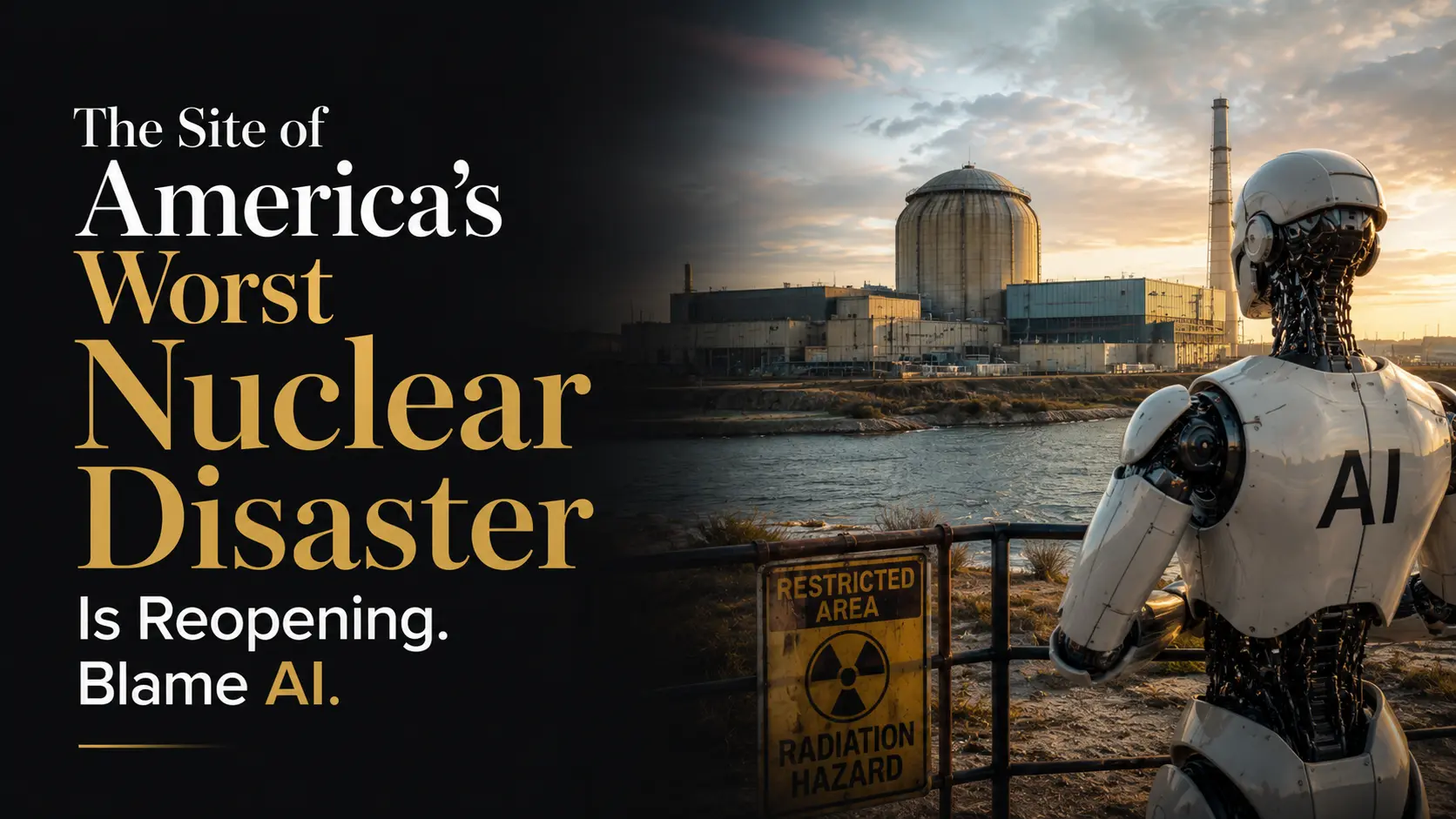
MIDDLETOWN, Pa. — In March 1979, Three Mile Island’s Unit 2 reactor suffered a partial meltdown, the worst commercial nuclear accident in U.S. history. It reshaped how an entire generation of Americans thought about nuclear power and froze new reactor construction for decades.
Now the plant next door, Unit 1, is coming back online. Not to power homes. To power AI.
Why it matters: Microsoft signed a 20-year, 835-megawatt deal with Constellation Energy to buy electricity from the reopened plant, now rebranded the Crane Clean Energy Center, worth roughly $16 billion over its lifetime. The Nuclear Regulatory Commission approved fuel storage plans for the restart this month. Unit 1 wasn’t damaged in the 1979 accident, it was simply shut down in 2019 because it had become too expensive to run. AI just made it worth turning back on.
Why AI companies want nuclear specifically
Data centers need power every hour of every day, at near-perfect reliability. Solar and wind can’t do that without expensive battery backup attached. Nuclear can, once it’s running, which is exactly the pitch that’s turned Big Tech into the nuclear industry’s newest and biggest customer.
Microsoft isn’t alone:
- Google has ordered up to 500 megawatts from small modular reactors under development by Kairos Power, targeting 2030 and beyond.
- Amazon has poured more than $20 billion into converting its Susquehanna, Pennsylvania data center campus, next to an existing nuclear plant, into an AI-focused operation.
- Meta has put out a request for proposals seeking 1 to 4 gigawatts of new nuclear generation.
Nuclear supplied about 18% of U.S. electricity in 2024. The tech industry’s sudden interest is now driving a genuine restart wave: Holtec’s Palisades plant in Michigan is targeting its own 2026 restart, and the Department of Energy’s UPRISE initiative aims to add 2.5 gigawatts of nuclear capacity through restarts and upgrades by 2027.
Not everyone is comfortable with the speed
Constellation initially targeted 2028 for Unit 1’s return, then moved it up to 2027 after a fuel supply decision cleared faster than expected. That pace worries at least one longtime local advocate. Eric Epstein, who lives near the plant and directs the group Three Mile Island Alert, has questioned whether the NRC’s recent approvals reflect careful review or simply regulatory momentum outrunning scrutiny.
Others in the area see it differently, focused on the jobs and tax revenue a restart brings to Middletown and the surrounding county. Constellation renamed the facility the Crane Clean Energy Center rather than keep the Three Mile Island name in its marketing, a decision the company frames as reflecting the plant’s new mission, not a bid to distance itself from 1979.
What comes next
The Nuclear Energy Institute’s most recent industry survey shows utilities now planning for 23.4 additional gigawatts of nuclear generation through 2039, more than 50% higher than prior projections. Whether all of that materializes on schedule is genuinely uncertain. Building or restarting nuclear capacity has a long history of slipping deadlines.
The bottom line: Fifty years after Three Mile Island became a symbol of nuclear fear, it’s about to become a symbol of something else entirely: how badly the AI industry needs power, and how far it’s willing to go, literally, to get it.
The jobs case versus the safety case
Local reaction to the restart splits along fairly predictable lines. Middletown officials and business groups tend to emphasize the jobs and tax revenue a reopened plant brings to a county that’s watched steady population decline for years. Epstein and other longtime safety advocates counter that the same regulatory system overseeing this restart is the one that failed to prevent the 1979 accident in the first place, and argue that speed and safety don’t always point the same direction.
Both sides agree on one thing: this restart is happening because of a demand curve nobody fully expected five years ago, not because of any change in how safe nuclear power itself has become. Whether that’s reassuring or unsettling probably depends on how close you live to the plant.