
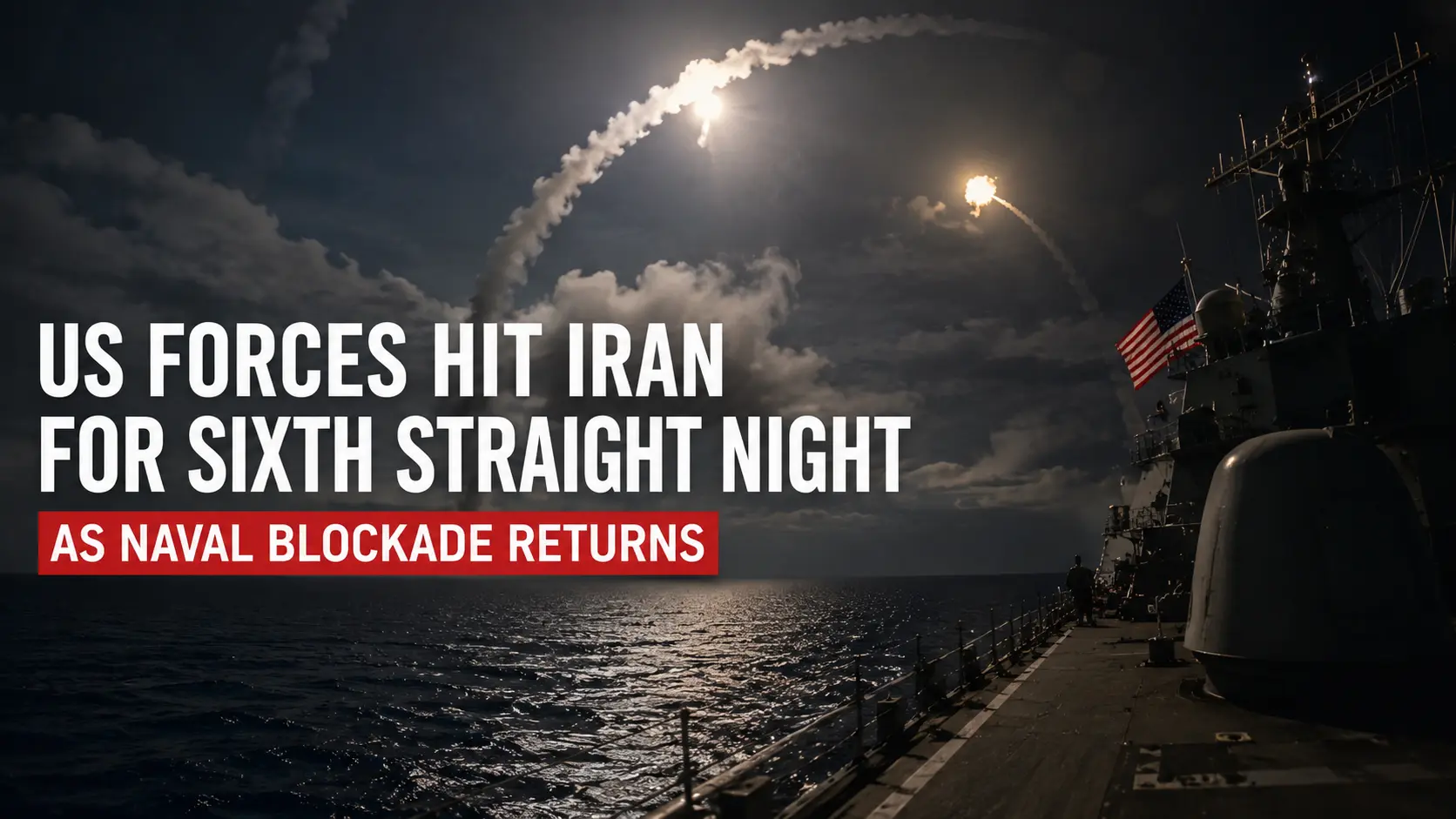
American forces struck Iran for a sixth consecutive night Thursday and reimposed a naval blockade on Iranian ports, escalating a conflict that reignited after a fragile ceasefire collapsed earlier this month.
U.S. Central Command said in a statement posted to social media that forces began a new round of strikes at 2 p.m. ET Thursday to “further degrade Iranian military capabilities,” hitting coastal defense systems and missile storage sites, including facilities on Iran’s Greater Tunb Island. More than 20 U.S. Navy warships and hundreds of aircraft are now operating across the Middle East, CENTCOM said, including the USS George H.W. Bush and its roughly 60 embarked aircraft.
The strikes came as the U.S. Navy resumed its blockade of Iranian ports this week, restarting an operation that ran from April 13 to June 18 before a ceasefire paused it. During that earlier stretch, CENTCOM said it redirected more than 140 compliant vessels and disabled nine ships that tried to run the blockade, while still allowing more than 50 humanitarian aid vessels through.
Iran’s Islamic Revolutionary Guard Corps warned Thursday it would not accept U.S. interference in the Strait of Hormuz, which carries roughly a fifth of the world’s oil and gas shipments. IRGC spokesperson Ebrahim Zolfaqari called the waterway an “inviolable red line” and warned that any U.S. attempt to seize control of it would trigger a far harsher response than the strikes carried out so far.
A collapsed truce
The current round of fighting follows a memorandum of understanding signed in June that briefly paused hostilities. President Trump declared that ceasefire over on July 8 after negotiations stalled over control of shipping through the strait, and the pace of U.S. strikes has climbed steadily since.
Trump has also threatened to strike Iranian bridges and power plants if Tehran does not return to the negotiating table, a threat Iranian officials say they are treating seriously even as they say they have no current plans for talks. Iran’s Foreign Ministry said this week it remains “focused on defense” rather than diplomacy for now.
Trump separately said in a television interview that the U.S. intends to serve as the long-term guardian of the Strait of Hormuz. He said he had dropped a planned 20% fee on cargo moving through the waterway, replacing it instead with trade and investment commitments from Gulf states.
Ripple effects across the Gulf
Brent crude, the international oil benchmark, closed at a one-month high near $85 a barrel this week as shipping through the strait slowed sharply and insurers raised rates for tankers willing to transit the region. Some shipping firms have paused routes through the strait entirely.
The fighting has spilled beyond Iran’s borders. Kuwait’s air defenses reported intercepting Iranian drones targeting its territory, and Qatar’s Interior Ministry said a child was injured by shrapnel during separate interception operations this week, underscoring how the conflict is drawing in neighboring Gulf states even as the core fight remains between Washington and Tehran.
With neither side signaling an openness to near-term negotiations, analysts say a full return to all-out war remains possible, though continued limited strikes and blockade enforcement appear the more likely near-term path. Global oil markets are expected to stay volatile as long as the strait remains contested.
The June ceasefire had followed months of joint U.S.-Israeli strikes on Iranian military and infrastructure sites that began in late February. Delegations from both countries held talks through the spring aimed at a lasting deal, but disagreements over who would manage traffic through the strait proved impossible to bridge, and the fragile truce lasted less than three weeks before strikes resumed.
Bahrain’s Defence Force said Tuesday its air defense systems intercepted several drones it described as hostile Iranian aggressions, adding another Gulf state to the list of countries reporting direct fallout from the conflict. U.S. officials say they expect the naval blockade to remain in place for an extended period, mirroring the two-month run of the earlier blockade earlier this year.